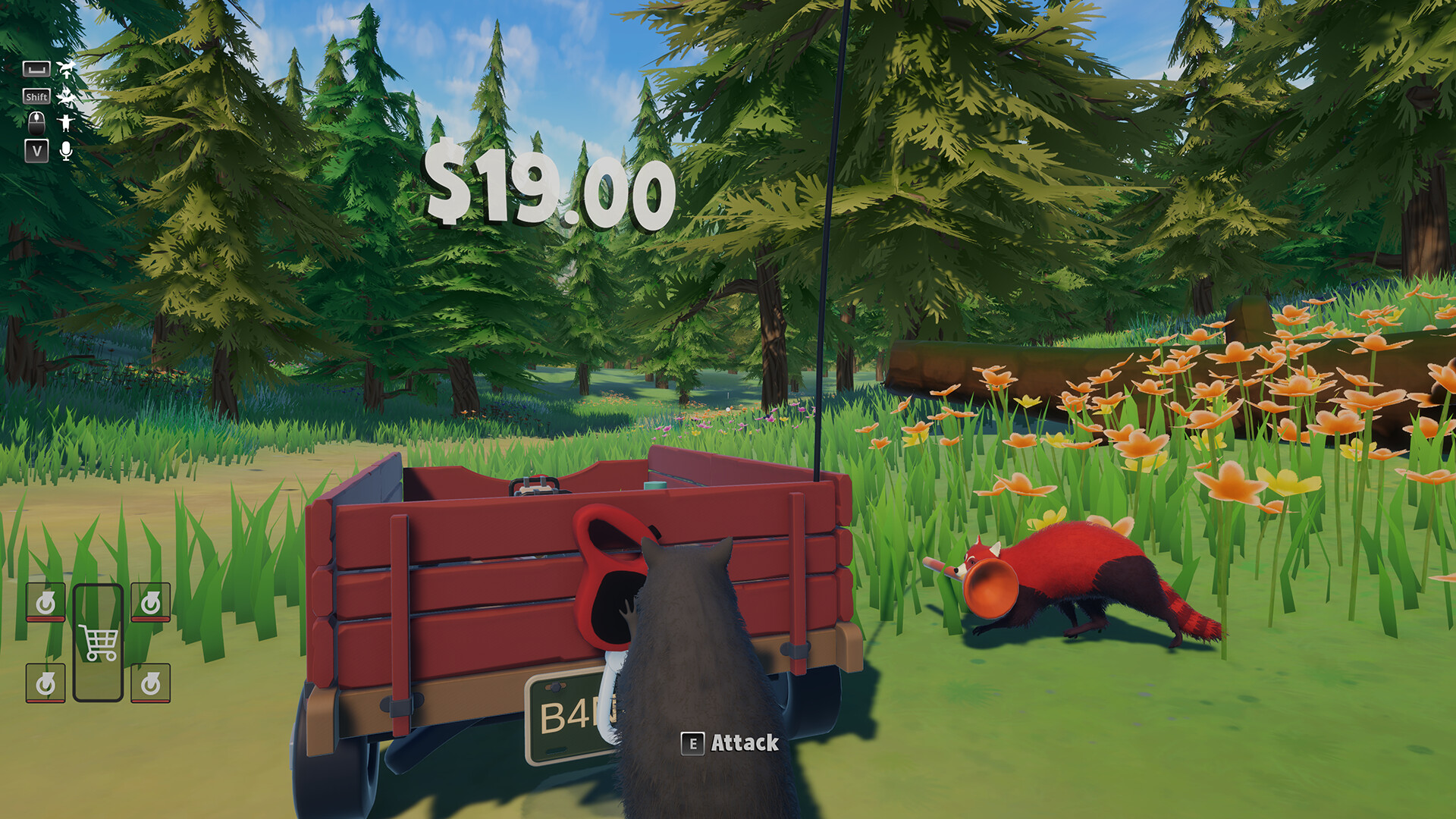
Trash Day solo play is a real, supported mode — Single Player is on the Steam feature list — but one raccoon has to do every wagon job alone, so busy highways, wide rivers, and guard-dog camps stall solo runs faster than co-op runs.
More context
The demo is the cheapest way to feel out solo before buying. If a run keeps stalling on the same obstacle, dropping into online co-op is the intended fix, not a workaround.
On this page
What changes when you play solo
Every wagon job falls on one raccoon: steering, pushing, repairing, building plank bridges, and pulling off distractions.
Obstacles that a squad clears in seconds take longer: rockslides, bear traps, and active highways slow down because nobody else shares the load.
Distracting guard dogs or hornets while the cart rolls past becomes the hardest part — there is no teammate to keep the haul moving while you bait a threat.
When solo play makes sense
Learning the loop: the demo is the cheapest way to see if the solo feel works for you before buying.
Short sessions: a single raccoon can still chip away at one of the six areas when friends are offline.
Personal challenge: players who want the harder difficulty path choose solo on purpose.
When to queue for co-op instead
The wagon-pushing loop is designed around multiple raccoons, so any run that involves a busy highway, a wide river, or a guard-dog camp is much easier with 2–6 players.
If the solo route keeps stalling on the same obstacle, dropping into online co-op is the intended fix rather than a workaround.